
The Chameleon CHA Hybrid Mini MPAS: A POTA Powerhouse?
If you’ve spent any time in the portable amateur radio world, then you probably know the name Chameleon Antenna. They have a reputation for building gear that is "built like a tank," though often with a price tag to match.
I own multiple Chameleon packable antennas but recently decided to move beyond my lightweight wire antennas and invested in the CHA Hybrid Mini MPAS (Modular Portable Antenna System). After several field activations with my Yaesu FTX-1, here is my deep dive into why this system has become a 9/10 staple in my mobile kit.
The Shift from Ultralight to Ultra-Versatile
For years, my go-to antennas have been lightweight end-fed half-waves (like the CHA-LEFS-4010) or inverted-V dipoles. These are fantastic for hiking, but they rely on portable mast or being thrown up into a tree.
The MPAS system changes the game. It is a modular system centered around the Hybrid Mini matching transformer. It allows for a massive range of configurations:
- Vertical Whip: Great for DX and low-angle takeoff.
- Horizontal/NVIS: Perfect for regional, emergency-style comms.
- Sloper, Inverted-L, or Inverted-V: For when you do have supports.
My Custom "Truck-to-Park" Setup
While the kit comes with a ground spike, I opted for a more stable, professional mounting solution for my "drive-up" activations:
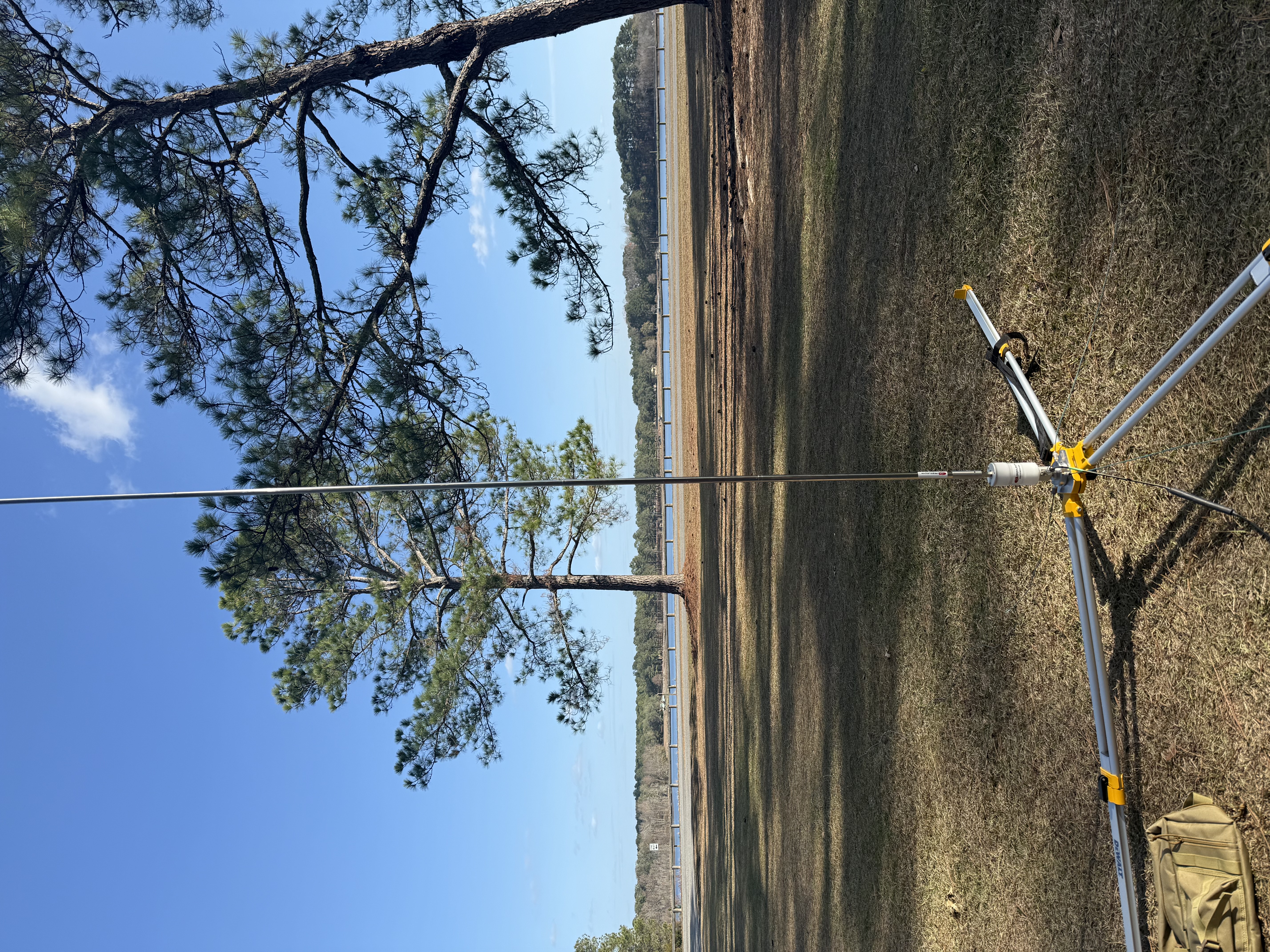
1. The Base: A DeWalt Surveyor Tripod paired with a specialized Chameleon tripod mount. It’s rock-solid and works on pavement or hard-packed dirt where stakes won't go.
2. A 25-foot telescopic vertical whip. It’s massive for a portable setup, but it’s incredibly rugged. During one activation, I watched it flex 45 degrees in a gust—it didn't flinch.
3. The Secret Sauce (Custom Radials): Instead of a single counterpoise, I used 14-gauge copper wire and banana clips to build four 33-foot radials tuned for the 40-meter band. This improved my ground plane significantly.
Field Performance: QRP Success
The real test of any antenna is how it performs when you’re only pushing 5 to 10 watts. I took this setup out for two initial activations, and the results were stellar:
- Activation #1: 61 contacts in just 2 hours.
- Activation #2: 31 contacts.
What impressed me most was the Voice-to-CW ratio. Usually, on QRP, voice is a struggle. With this setup, nearly half of my contacts were on phone. The efficiency of that 25-foot whip, combined with a solid radial set, made my low-power signal punch way above its weight class.
The Pros and Cons
Pros | Cons |
Speed: Full deployment in under 10 minutes. | Price: At ~$600, it's a serious investment. |
Durability: High-quality, rugged components. | Weight: Too bulky for long-distance hiking. |
Range: Covers 160m through 6m. | Tuner Needed: You'll want a tuner to find a match on all bands. |
Final Verdict: 9/10
Is it pricey? Yes. But as the saying goes, "you get what you pay for." This isn't a "disposable" antenna; it’s a piece of kit I expect to use for decades.
If you are a "truck-to-park" operator who wants a professional, rapid-deploy system that works primarily in areas with rules on tree use or ground spikes, the Chameleon MPAS is hard to beat. It has officially earned its spot in my go-bag.